ODIN
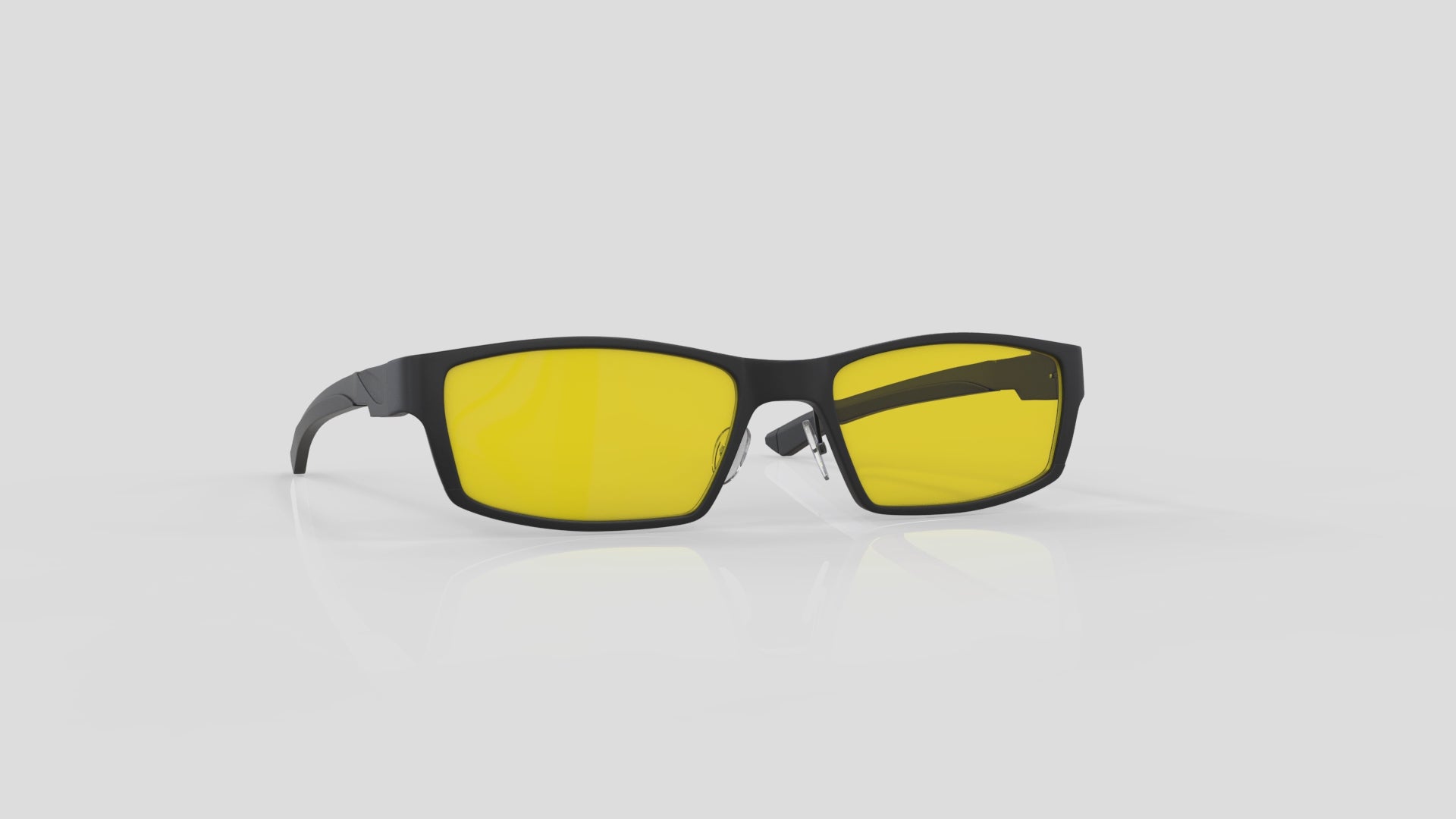
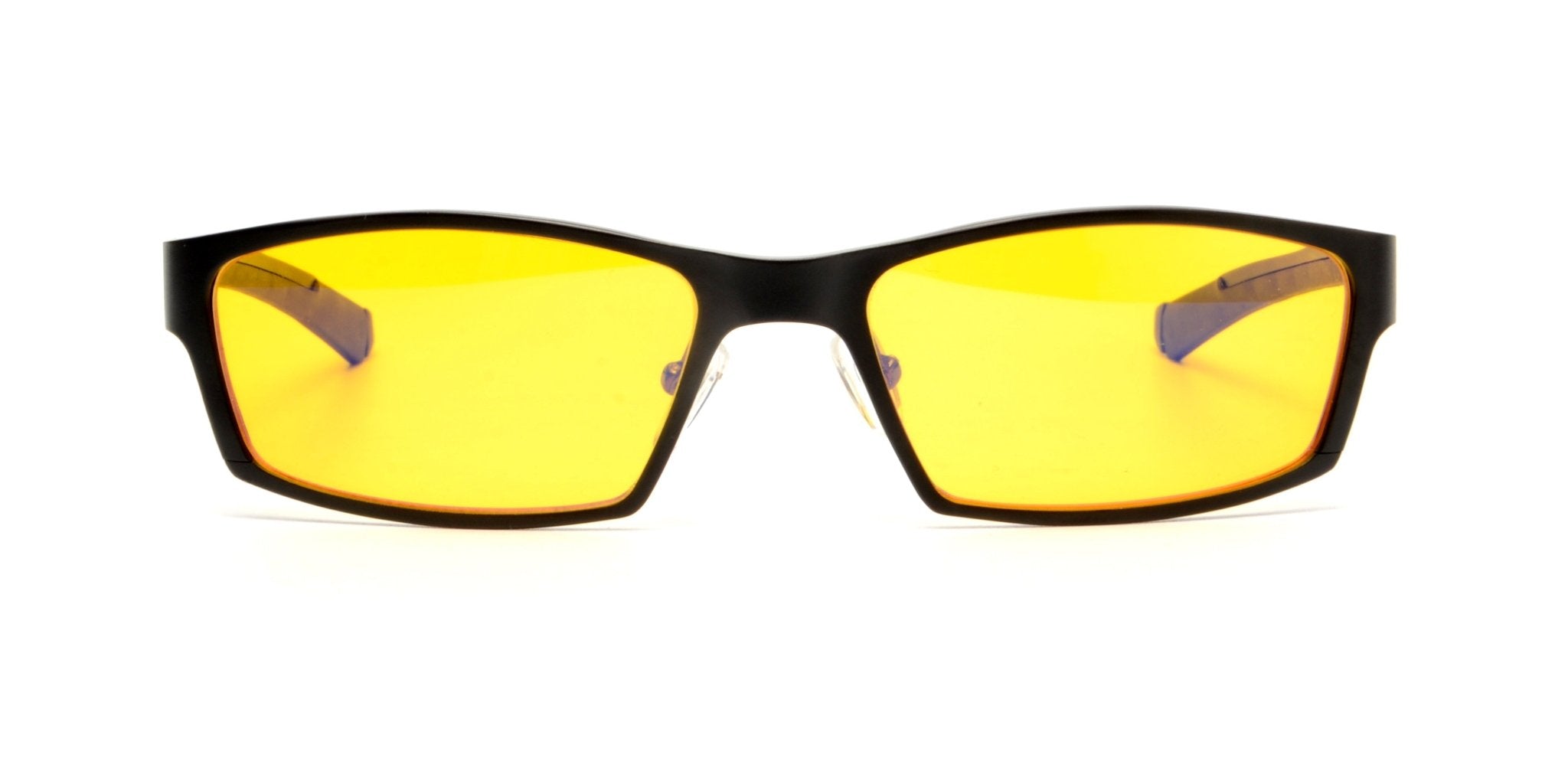
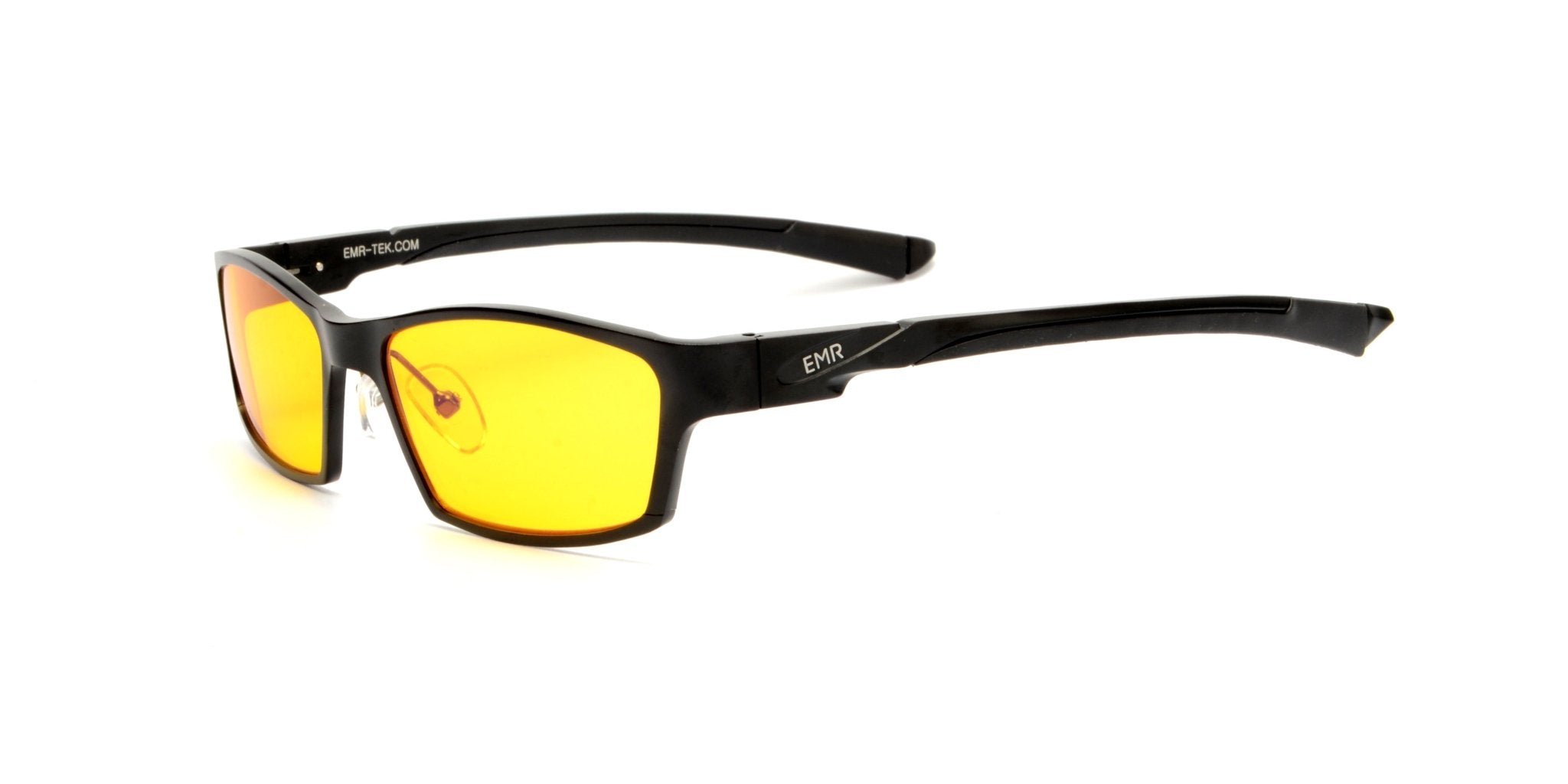
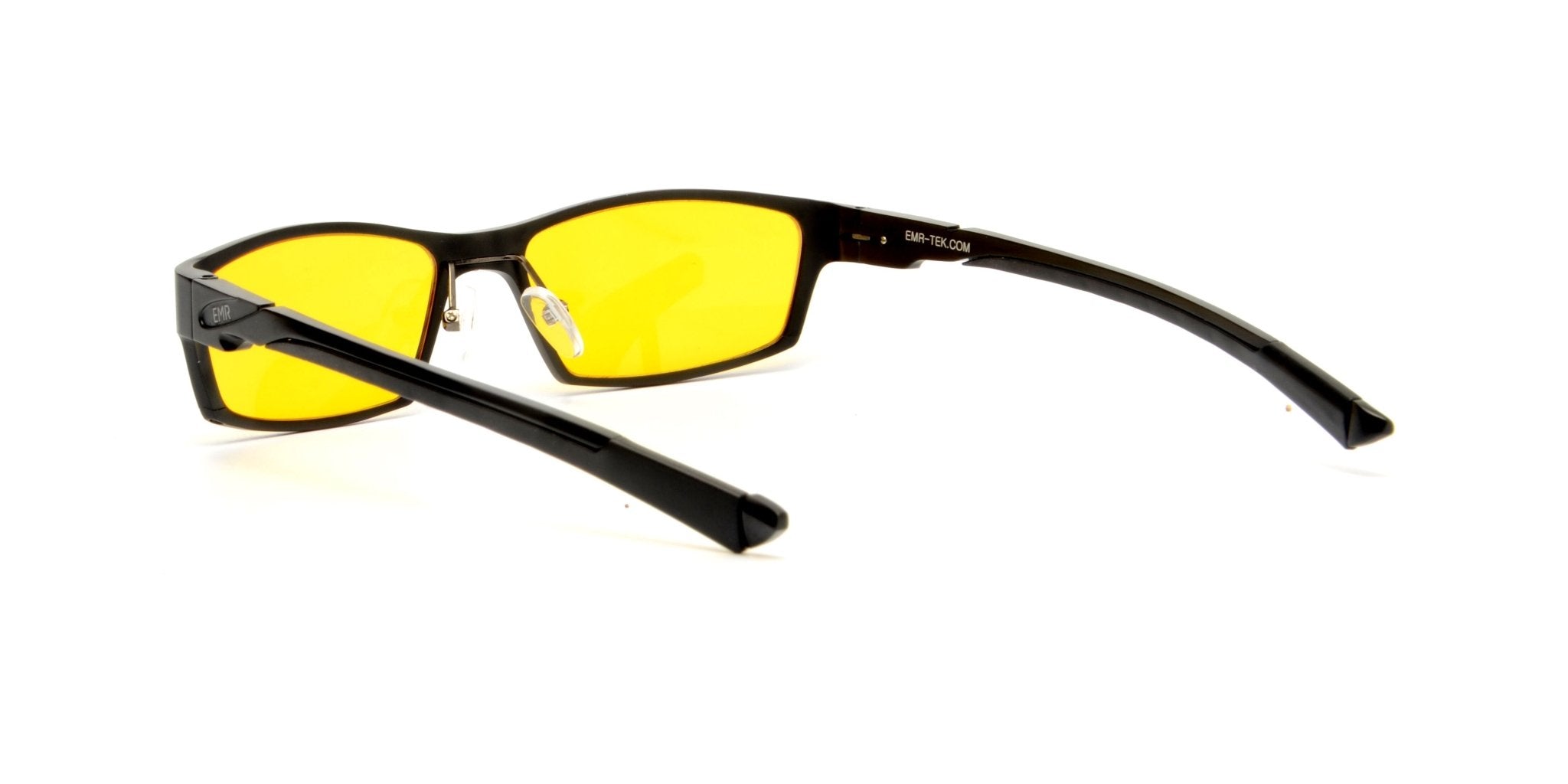
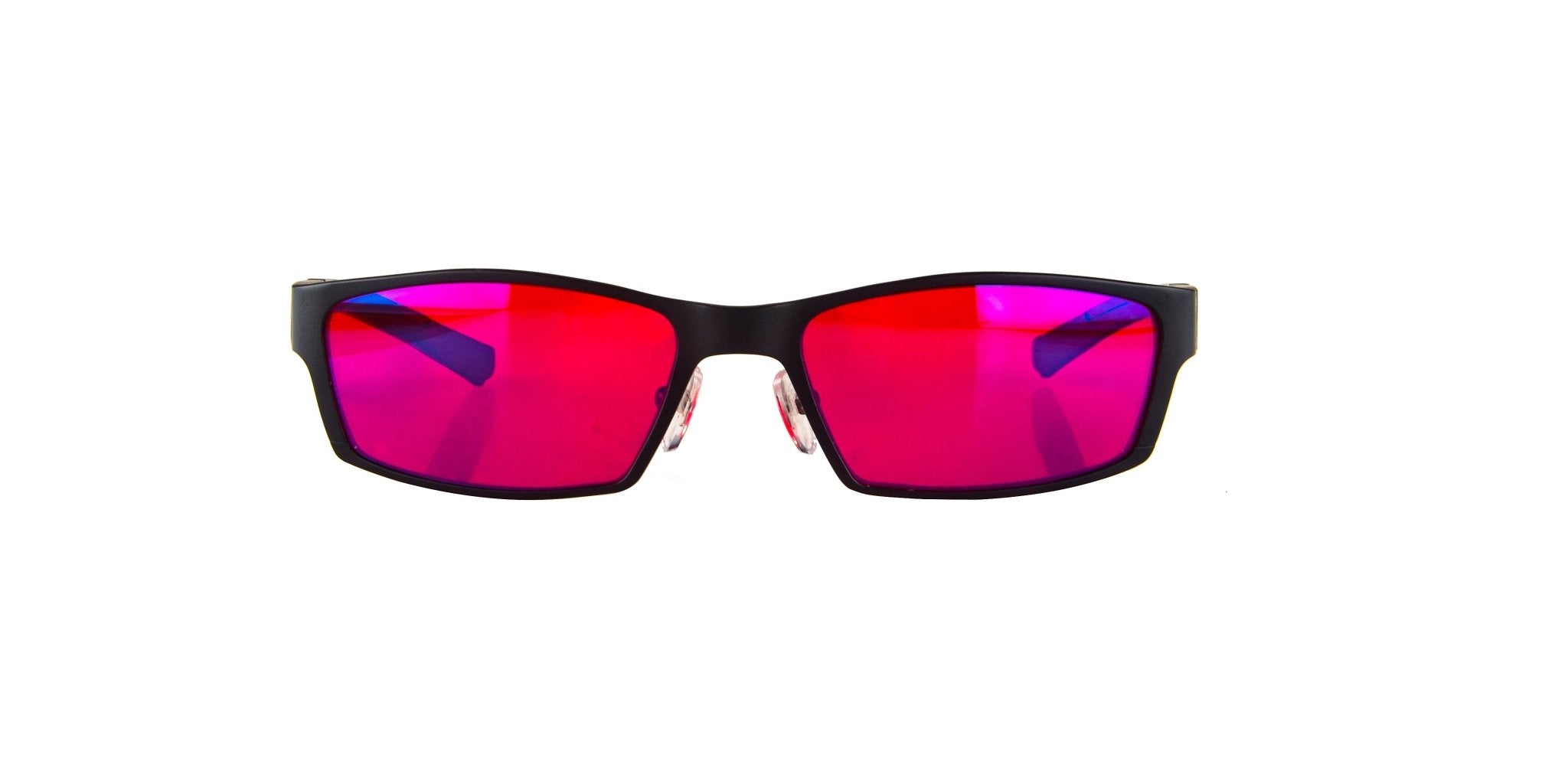
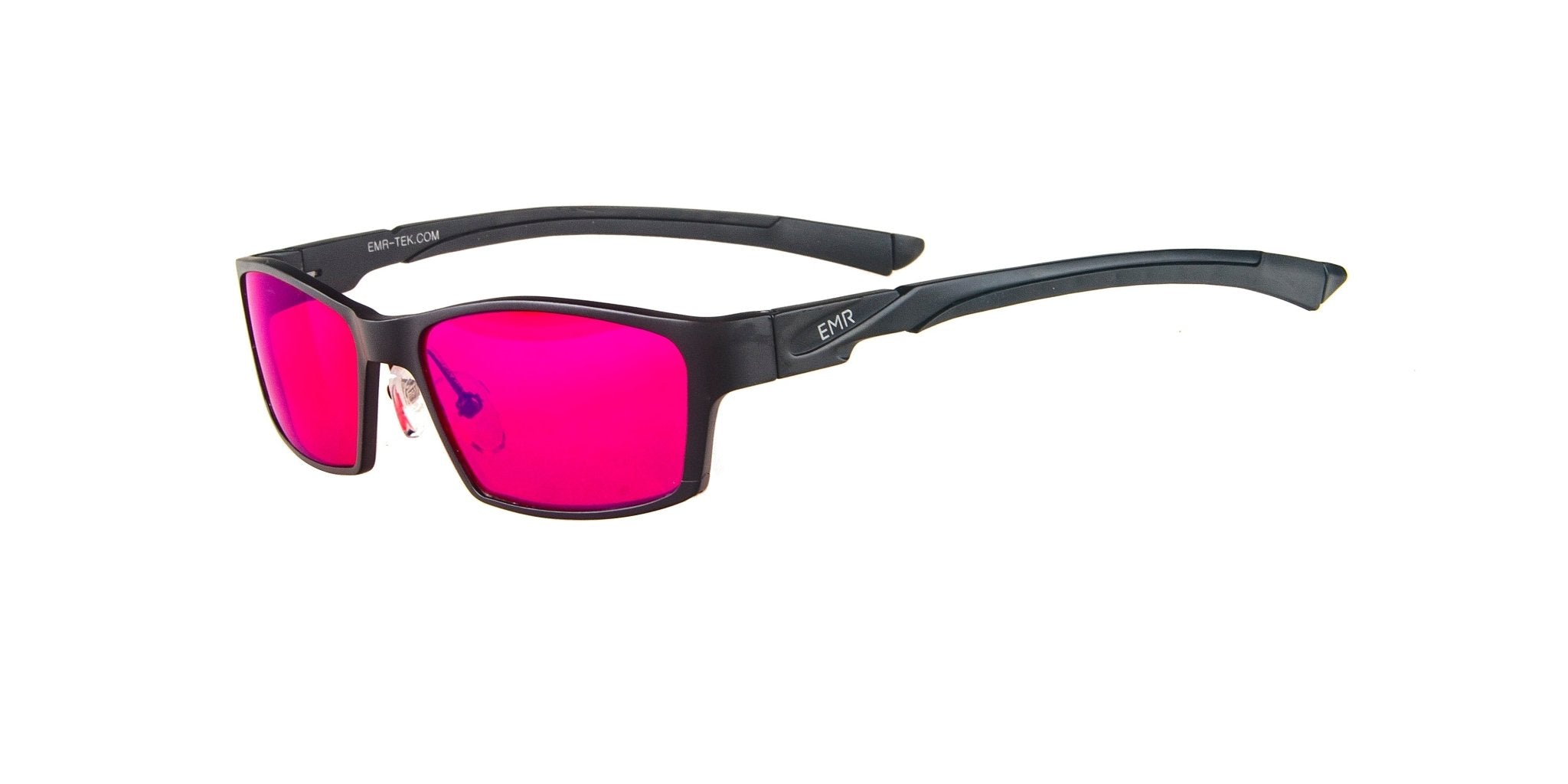
Slim visor profile. Lightweight aluminum-magnesium alloy.
The most technical frame in our lineup: a wide, very slim shield profile in aluminum-magnesium alloy — the lightweight, rigid combination used where strength per gram matters. Adjust it once and it holds its shape. Four lens tiers — lab-verified by Micro-Light Optics, measured on camera by The Blue Light Diet author Bobby Hunt, curves published on this page. Want the same look slightly bigger? That's the Anubis.
CALIBRATED, NOT JUST TINTED
A colored lens isn't automatically a calibrated one. Every EMR-TEK lens tier is optically calibrated to a published blocking range and verified two ways: on a spectrometer by an independent lab, Micro-Light Optics Co., Ltd., and on video by Bobby Hunt, author of The Blue Light Diet, measuring our lenses on his own UPRtek spectrometer. The lab's reports and Bobby's footage are both on this page. One verified standard across the line.
EVERY SPEC PUBLISHED
Clear blocks 30% of blue light. Yellow blocks 90%, with 94.4% measured at the 450nm blue peak. Orange blocks 98% across 400–520nm. Red blocks 99.6% of blue and green across 400–570nm. Four lens tiers matched to time of day, each with its own published blocking range — check the number, then check the curve.
50,000+ CUSTOMERS · 40+ COUNTRIES
Worn daily by practitioners, biohackers, sleep optimizers, and everyday screen users. Backed by our 30-day return and 1-year warranty.
Why evening light matters
Your body runs on a light schedule. Bright, blue-rich light in the morning tells your brain it's daytime — cortisol rises, you feel alert. Darkness after sunset tells it night has arrived — melatonin rises, and sleep follows. That rhythm worked automatically for most of human history, because the only light after dark was fire.
Screens and LED lighting changed that. Blue light in the evening is read by melanopsin, a photoreceptor in your eye, as a daytime signal — and the research here is consistent: blue-rich light at night suppresses melatonin. It's one of the best-established findings in circadian science, it happens at ordinary screen brightness, and it happens every night you're on a device after sunset. Melanopsin has also been found in skin, which is why evening light exposure is studied beyond the eyes alone.
Four lenses, built around your day
The goal isn't to block blue light. It's to get the right light at the right time. That's why there are four tiers instead of one:
- Clear (Daytime) — Blocks 30% of blue light. No color distortion. Daytime work where color accuracy matters. Natural blue light during the day is part of a healthy rhythm, so daytime protection is a lighter touch by design.
- Yellow (Screen hours) — Blocks 90% of blue light, with 94.4% measured at the 450nm blue peak. For long days under screens and artificial light indoors, where exposure is constant in a way sunlight never was. If your eyes feel it by late afternoon, this is the lens for that.
- Orange (Nighttime) — Blocks 98% of blue light across 400–520nm. Nighttime, when you still want to see properly — watching a movie, cooking dinner, being around people. Nearly all the protection, far less color distortion.
- Red (Nighttime, maximum) — Blocks 99.6% of blue and green across 400–570nm. Reading, winding down, the last hour before bed. Not for driving.
Green light suppresses melatonin the same way blue does, which is why the red lens blocks all the way to 570nm — the blue and the green, not just part of it. You can run the test yourself: put the red lens on at night and look at a green traffic light. It disappears completely. That's the 570nm cutoff working.
Put the night lenses on at sunset, not at bedtime — melatonin doesn't switch on instantly, and the earlier the evening signal is protected, the better the rhythm holds. Most people who wear red at night end up owning orange too: red for the hour before sleep, orange for everything else after dark.
One timing note: skip the strong tiers in the morning. Morning light is what sets your internal clock, and it's the reason the clear lens blocks 30% rather than 90% — daytime protection is meant to be a lighter touch.
Check the graphs, then watch the test
Every lens tier was tested by Micro-Light Optics Co., Ltd., and the transmission data is on this page two ways: the lab's professional reports for verification, and our animated graphs for your understanding.
[Watch the Test]
Verified on camera by Bobby Hunt, author of The Blue Light Diet
Built to be worn daily
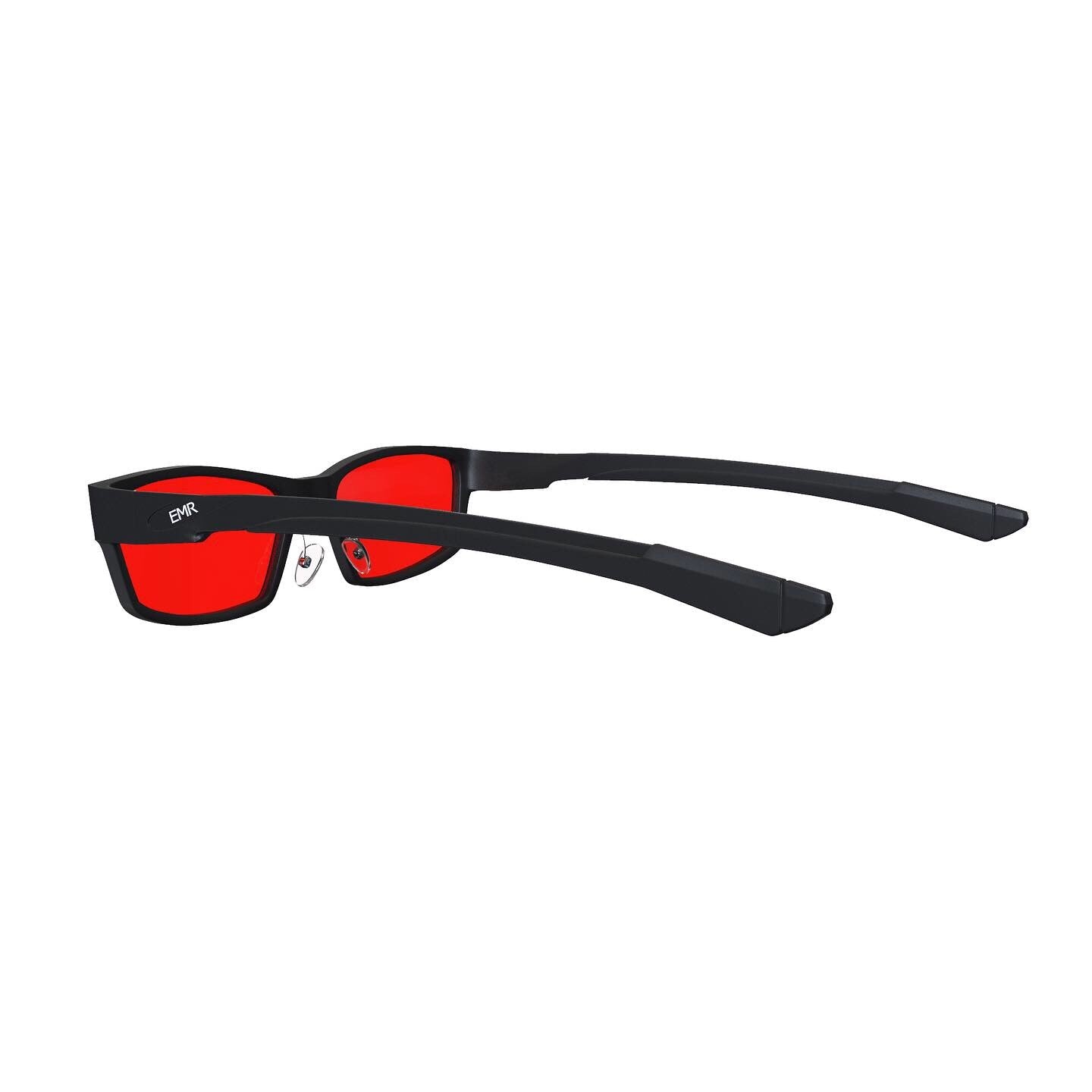
Aluminum-magnesium alloy — harder and lighter than acetate, it doesn't drift over time. Lens 55 × 31.6mm, the slimmest lens height in our lineup. Bridge 17mm, temple 135mm. One thing worth knowing: lens height affects coverage area, not filtration — the blocking percentages are identical across every frame. Covered by our 1-year warranty and 30-day returns. FCC, RoHS and CE certified.
Lens options
Plain ($109.99). +1.25 or +2.00 magnification readers — same price as plain, $109.99. Single-vision prescription ($219.99). Progressives or bifocals ($249.99). Every frame, every option.
Frequently Asked Questions
Which lens do I wear, and when?
Four tiers, matched to the clock:
Clear — daytime. Blocks 30% of blue light with no color distortion, for daytime work where color accuracy matters. Daytime protection is a lighter touch by design: natural blue light during the day is part of a healthy rhythm, so we don't block it aggressively.
Yellow — screen hours. Blocks 90% of blue light, with 94.4% measured at the 450nm blue peak. For long days on computers and phones under artificial light, without so much color shift that you can't work.
Orange — nighttime. Blocks 98% of blue light across 400–520nm. For after sunset, when you still want to see properly — watching a movie, cooking dinner, being around people. Nearly all the protection, far less color distortion.
Red — nighttime, maximum. Blocks 99.6% of blue and green across 400–570nm. For reading and winding down in the last hour before bed. This is the strictest tier.
Put the night lenses on at sunset rather than at bedtime — the earlier the evening signal is protected, the better the rhythm holds. Most people who go all-in end up owning two pairs: red for the hour before sleep, orange for everything else after dark. If you're buying one pair to start, yellow is the most versatile — daytime-friendly, with real evening protection, just not as much as orange or red.
How do I know the lenses block what you say they block?
You don't have to take our word for it. Every lens tier was tested by an independent lab, Micro-Light Optics Co., Ltd., on a spectrometer, and the transmission data is published right on this page — the lab's professional reports for verification, and our animated graphs for your understanding. You can also watch a measurement happen: the Watch the Test button plays video of Bobby Hunt, author of The Blue Light Diet, running our lenses on his own UPRtek spectrometer.
One example of what the curves show: the red tier blocks 99.6% of blue and green light across the full 400–570nm range. That's why, if you put the red lens on at night, green traffic lights disappear completely. Green suppresses melatonin the same way blue does, so we block all the way to 570nm.
Can I get them in my prescription?
Yes — every frame, every option. Plain lens, +1.25 or +2.00 magnification readers, single-vision prescription, progressives, and bifocals, all available in every lens tier. Prescription pairs are individually made to your script, so allow 3–4 weeks from order to delivery.
How fast do they ship, and what about customs?
Off-the-shelf tiers: US orders ship in 1–2 business days, and you can expect the glasses to arrive within 9–10 business days of ordering. Free shipping over $99. International orders ship with duties and taxes prepaid to the US, Canada, UK, EU and Australia — no surprise customs bill at your door.
What if I picked the wrong tier?
Send them back within 30 days for a full refund — no restocking fees. Most returns are actually tier swaps (usually red for orange, from people who found full color distortion too much for movie nights — that's exactly what orange is for). Email support before shipping back and we'll handle the exchange directly, so you're not paying return shipping twice.
Can I drive or work in the red lenses?
Don't drive in the red tier. It blocks green as well as blue, so the green traffic light disappears completely — that's the lens working exactly as designed, but it's not safe behind the wheel. If you need protection while driving at night, use yellow or orange.
For everything else, red is fine: reading, conversation, TV, anything around the house. If you do color-accurate work — design, photo, video editing — use clear or yellow during the workday and switch to orange or red when you're winding down. 30-day return, 1-year warranty, FCC / RoHS / CE certified.